Research Report
In Vitro Toxicity Levels of Urtica massaica Mildbr (Family: Urticaceae) on Anopheles gambiae Giles (Diptera: Culicidae) Mosquitoes 
 ,
Khatoro R.T.2
,
Khatoro R.T.2  ,
Aketch C.O.3 ,
Gitonga N.M.4
,
Aketch C.O.3 ,
Gitonga N.M.4 2 School of Environmental Studies, University of Eldoret, P. O. Box 1125 - 30100, Eldoret, Kenya
3 Kenya National Examination Council, P. O. Box 73598-00200, City Square, Nairobi-Kenya
4 School of Biological Sciences, Karatina University, P.O. Box 1957-10100 Karatina, Kenya
Author Correspondence author
Journal of Mosquito Research, 2026, Vol. 16, No. 1 doi: 10.5376/jmr.2026.16.0002
Received: 01 Feb., 2026 Accepted: 27 Feb., 2026 Published: 10 Mar., 2026
Yugi J.O., Khatoro R.T., Aketch C.O., and Gitonga N.M., 2026, In vitro toxicity levels of Urtica massaica Mildbr (family: Urticaceae) on Anopheles gambiae Giles (Diptera: Culicidae) mosquitoes, Journal of Mosquito Research, 16(1): 21-27 (doi: 10.5376/jmr.2026.16.0002)
Botanicals are targets for green insecticides and alternatives to synthetic insecticides. In this study, a randomized experimental design with control was used to evaluate in vitro toxicity level (LC50 and LC90) of crude methanol and hexane Urtica massaica leaf, stem and root extracts on immature stages of Anopheles gambiae. 100 eggs, larvae or pupae were exposed to doses of 80 mg/100mls (e/w), 40 mg/100mls (e/w), 20 mg/100mls (e/w), 10 mg/100mls (e/w), 5 mg/100mls (e/w), 2.5 mg/100mls (e/w) of the extracts in clear plastic containers measuring 6 cm × 5.7 cm × 3.5 cm. Each container held 33 mls of a dose and either 33 eggs, larvae or pupae. The experiments were replicated four times. The set ups were left to stand overnight except that of eggs that stood for 48hrs. Mortality was assessed at the end of the period. It was found that methanol extracts were more toxic than hexane and leaf and root extracts were more toxic than stem extracts. Dose and solvent of extraction significantly influenced mortality (p < 0.05) of all stages for methane and hexane extracts except for hexane root extracts (p > 0.05) used against L3s. Since calculated goodness of fit was greater than the critical value (χ2 = 22.4; df = 22; p < 0.05) for all cases, the null hypothesis was rejected and the conclusion that U. massaica crude extracts was toxic to immatures of An. gambiae in vitro was adopted. It is concluded that U. massaica crude extracts are toxic against immatures of An. gambiae in vitro.
1 Background
Mosquitoes are vectors of global public health importance as the mosquito borne infections (MBI) (WHO, 2020) for which they are famous are of global public health concern (WHO, 2022). Indeed, the infections threaten more than 40% of the world’s population (Franklinos et al., 2019), with malaria accounting for the highest reported cases of morbidity and mortality (Maharaj et al., 2019; WHO, 2021; Oladipo et al., 2022; Li et al., 2024). Most cases of malaria infections occur in sub-Saharan Africa (WHO, 2019; WHO, 2020). Intervention against malaria is largely through vector management due to lack of effective medication and vaccination and though RTS, S/AS01 vaccine has been endorsed against malaria (WHO, 2021; Ogieuhi et al., 2024), it is faced with a myriad of challenges (Sallam et al., 2025). Additionally, the vaccine is mainly meant for children and regions with moderate to high Plasmodium falciparum malaria transmission (WHO, 2021).
The first line mitigative measure against malaria vector over the years has been the use of synthetic insecticides on various platforms (WHO, 2018; WHO, 2019). These have successfully managed the vector densities (Derua et al., 2018; Derua et al., 2019), interfered with their host-seeking behaviour, reduced their contacts with humans and reduced malaria disease transmission (Cibulskis et al., 2016, Govindarajan et al., 2016). However, their continued indiscriminate use has led to resistance in mosquito populations (Oduola et al., 2019; WHO, 2020; Peng et al., 2022) in addition to unwarranted environmental toxicity (Deng et al., 2019; Semenza et al., 2022; Wafula et al., 2023). These challenges are expected to escalate with emerging issue with climate change, alien vector spp. and the ever-growing threat of resistance to antimalarial drugs and insecticides (Mordecai et al., 2020; Li et al., 2024). Envisaged solution is bringing on board new inventions and strategies (Richards et al., 2020).
In the recent years, the use of natural products from plants has witnessed a lot of attention as the derived biopesticides also known as secondary metabolites, have shown abilities of killing or repelling mosquitoes (Youmsi et al., 2017; Ali et al., 2023). It has also been found to be target specific, non-toxic to valuable natural enemies, fully biodegradable (Vivekanandhan et al., 2018; Vivekanandhan et al., 2020), of broad spectrum (Ebadollahi et al., 2020), and a promising alternative to synthetic insecticides (Yohana et al., 2022). Their use is envisaged to be sustainable as they are readily regenerative, of low cost and environmentally safe (Borges, 2016; WHO, 2020). The use of extracts of U. massaica, though proven as botanicals with promising biospesticide potential (Khatoro et al., 2021; Owiti et al., 2025), the demonstration has not been exhaustive. This study therefore demonstrates in vitro toxicity levels of Urtica massaica on Anopheles gambiae mosquitoes.
2 Results
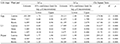
It was found that methanol extracts were required in smaller doses as compared to hexane extracts of stem or roots for the LC50 regardless of plant parts or immature stage exposed. However, the trend for the LC90 was different. Dose did not influence (p > 0.05) mortality of exposed aquatic stages (Table 1). For hexane solvent, extracts from the roots were more toxic than those of stem and leaves for LC50 regardless of immature stage exposed. No singular trend was observed for the LC90. Dose and solvent of extraction significantly influenced mortality (p < 0.05) of all exposed aquatic stages except for L3s exposed to root extract (p > 0.05) (Table 2). However, because all observed calculated goodness of fit were greater than the critical value (χ2 = 22.4; df = 22; p < 0.05) for all cases, the null hypothesis was rejected and the alternative adopted.
|
Table 1 Lethal concentration (LC50 & LC90) of methanol extracts of U. massaica plant parts against different aquatic stages of An. gambiae mosquitoes Notes: df = degree of freedom; χ2 = the chi-square factor; P = probability for the level of significance. P was taken as significant at p<0.05; LC = refers to lethal concentration, LC50 & LC90 concentration that kills 50% & 90% of exposed experimental aquatic stage; L3 = third larval instar. Rows having LC estimates superscripted with letter “a” denotes no significant influence of dose on exposed An. gambiae aquatic stages |
.png)
|
Table 2 Lethal concentration (LC50 & LC90) of hexane extracts of U. massaica plant parts against different aquatic stages of An. gambiae mosquitoes Notes: As described (Table 1) except for “b” to denote significant influence of dose on the aquatic stages |
3 Discussion
In the study herein, it was demonstrated that leaf and root extracts of methanol and hexane extracts respectively were required in smaller amounts and therefore more toxic than extracts of the other parts of U. massaica regardless of aquatic stage exposed or dose administered. This could be explained by differential concentration of bioactives in different parts of a plant. Indeed, secondary metabolites also known as botanicals are distributed differently in different plant parts. That is some plant parts have higher and others lower concentrations. This could be judged from the activity of extracts from different parts of a plant in a bioassay. The amount therein being directly proportional to activity. The more the concentration, the more potent the extracts (Yugi and Kiplimo, 2017). It is assumed therefore that the leaves and roots for methanol and hexane extracts contained the highest concentrations of botanicals respectively, a finding that was consistent with those of Anupam et al., (2012) and Yugi and Kiplimo, (2017), for methanol extracts but inconsistent with that of Thouri et al., (2017) for hexane extracts.
In this study methanol extracts were more potent than hexane extracts. Methanol is more polar than hexane and according to the findings of Thouri et al. (2017), Borges et al. (2020) and Nguyen et al., (2021) possess optimal extraction ability as well as capacity to conserve the stability of the chemical structure of desired compounds. This finding was similar to others that demonstrated the influence of solvent type on extracted bioactives as well as larviciding potency (Anupam et al., 2012). However, it is noted that there is not a single standard solvent for optimal bioactive extraction as different solvents react differently for different plant matrices (Ngo et al., 2017).
Mosquitoes are a very important group of arthropods based on their role in the transmission and impact of mosquito borne infection (MBI) to humanity (WHO, 2020) and thus have been under constant human surveillance. Such has today yielded the best possible approaches of mosquito attack some of which include oviciding (Khatoro et al., 2021), larviciding (Yohana et al., 2022), pupiciding (Khatoro et al., 2021) and adulticiding (Muhammed et al., 2022) targeting the life stages of the vector. But again, the success observable today in managing malaria vector population is only possible because the ontogeny of the vector is predictable. As the adage goes, ‘a chain is as strong as its weakest link’. The vector’s aquatic stages (eggs, larvae and pupae) are the weakest link in the chain (life cycle). This is because their movement is restricted to the breeding ground (stagnant water) and are unable to escape to avoid “invasion or attack” by natural enemies (predators) or anthropogenic neutralization (through insecticides). It follows therefore that programmes that target mosquito immature stage are highly impactful (Chung et al., 2009; Conti et al., 2010). Indeed, larviciding has been the most preferred malaria vector control tool (Thomas, 2018) as the statistics on reduced malaria incidence and mortality due to reduced larval and adult mosquito abundance (Afrane et al., 2016; Ingabire et al., 2017) has largely been due to targeting the larvae (William et al., 2018; Zhou et al., 2020). When the larvicide is a biopesticides as is in this study, the programme transforms into the use of green biopesticide and biodiversity conservancy. This is because the biopesticide is not only lethal but since extract is a composition of varied acting bioactives, the vectors don’t get to mount effective resistance against them. Additionally, since plants from which the biopesticides are derived are easily accessible and regenerative, the programme is not only sustainable and safe (Govindarajan et al., 2016), it also leads to conservation of the plant resources. It is therefore a solution to insecticide resistance mosquitoes, sustainable use and conservation of resources (Rahimi et al., 2019; Rahimi et al., 2020).
3.1 Conclusion
It is concluded that leaf, stem and root methanol and hexane crude extracts of U. massaica are required in small amount to kill immature An. gambiae mosquitoes. Their toxicity levels are promising as candidates for natural mosquito control strategies.
4 Materials and Methods
4.1 Study area, experimental mosquitoes, study design and laboratory conditions
This was an in vitro designed study conducted at the Centre for Global Health Research (CGHR) entomology laboratory where immature stages (Eggs, third larval instars (L3s) and pupae) of An. gambiae were sourced. The experimental design used was as described (Kothari, 2004; Yugi and Kiplimo, 2017). Briefly, a completely randomized informal ‘after-only with control’ experimental design was used with the solvent, dose and biopesticide extracts taken as independent while mortalities as dependent variables. Distilled water was taken as negative control. The laboratory temperatures and humidity were 28 oC~30 oC and 70%~80% respectively. Photoperiod was 12 hrs light (06.30~18.30 hrs) and 12 hrs darkness (18.30~0630 hrs).
4.2 Urtica massaica plant parts source, extraction and stocks solution preparation
U. massaica plant (leaves, stem and roots), voucher specimen number JOY2017/001 were sourced from 35o16’ 46’’ E, 0o31’ 41’’ N in Eldoret, Kenya. The extraction and processing of the biospesticide was done as described by Khatoro et al., (2021). Briefly, two grams of crude biopesticide stock’s extracts was dissolved in 200 millilitres (mls) of dimethyl sulfoxide (DMSO). 160 mls (with 160 mls (v/v) of extract) of this solution was obtained and topped up with 40 mls of distilled water to make 200 mL (with 160 mls (v/v) of extract). This solution was then aliquoted in two beakers of equal capacity (100 mL) each to give a concentration of 80 ml/100ml (s/w). One of this was picked and 100ml distilled water added to top it up to 200 mls and then aliquoted in equal units of 100 mls to give a concentration of 40 mL/100 mL (s/w). This procedure was repeated until serial dilution of 80 mL/100 mL (s/w), 40 mL/100 mL (s/w), 20 mL/100 mL (s/w), 10 mL/100 mL (s/w), 5 mL/100 mL (s/w), 2.5 mL/100 mL (s/w) were obtained for the leaf, stem and root extracts.
4.3 Toxicity bioassay
Toxicity bioassays was conducted as described by Khatoro et al., (2021) and insecticidal potency of the biopesticide determined following the WHO, (2005) procedures. Briefly, 100 freshly transformed third larval instars (L3) were transferred by means of a dropper to plastic containers measuring 6 cm × 5.7 cm × 3.5 cm and left exposed for 24 hours after which the experiment was stopped. The experiments were replicated four times. This procedure was repeated for eggs and pupae for both methanol and hexane extracts. Eggs were however exposed for 48 hours. Mortality was calculated (i) and corrected (ii) using Abbot’s (1925) formula for mortality of 5 % larvae in the control.
.png) ...................................(i)
...................................(i)
.png) ........(ii)
........(ii)
4.4 Statistical Analysis
Data was organized in excel spreadsheets and analysed using regression (probit) statistics to determine levels of toxicity (LC50 and LC90) for the 50% and 90% respectively for dose and solvent of extraction. Levels of significance were adopted at 95% confident interval (CI) (that is at p ≤ 0.05). Calculated goodness of fit was compared with critical value (χ2 = 22.4) at the same CI to inform on the relationship with the hypothesis of no relation. All statistical analysis was performed using statistical package for social scientists (SPSS) version 22.
Authors’ contributions
Conceptualization, data analysis, and writing of the original draft done by JOY, supervision, methodology, investigation, data collection, review and editing done by all authors.
Acknowledgements
We thank Richard Amito, Gayle Aurelia and Harnell Versey for processing and culturing the experimental mosquitoes, Centre for Global Health Research (CGHR), Kisumu for providing laboratory space, experimental mosquitoes and equipment respectively and University of Kabianga for funding the project.
Competing interests
None
Abbott W.S., 1925, A method of computing the effectiveness of an insecticide, Journal of Economic Entomology, 18: 265-267.
http://dx.doi.org/10.1093/jee/18.2.265a
Afrane Y.A., Mweresa N.G., Wanjala C.L., Gilbreath III T.M., Zhou G., Lee M.C., Githeko A.K., and Yan G., 2016, Evaluation of long-lasting microbial larvicide for malaria vector control in Kenya, Malaria Journal, 15: 577.
https://www.doi.org/10.1186/s12936-016-1626-6
Ali A., Shah F.M., Manfron J., Monteiro L.M., de Almeida V.P., Raman V., and Khan I.A., 2023, Baccharis species essential oils: repellency and toxicity against yellow fever mosquitoes and imported fire ants, Journal of Xenobiotics, 13: 641-652.
https://doi.org/10.3390/jox13040041
Anupam G., Nandita C., and Goutam C., 2012, Plant extracts as potential mosquito larvicides, Indian Journal of Medicine and Research, 135: 581-598.
Borges A., Abreu A., Dias C., Saavedra M., Borges F., and Simões M., 2016 New perspectives on the use of phytochemicals as an emergent strategy to control bacterial infections including biofilms, Molecules, 21: 877.
https://www.doi.org/10.3390/molecules21070877
Borges A., José H., Homem V., and Simões M., Comparison of techniques and solvents on the antimicrobial and antioxidant potential of extracts from Acacia dealbata and Olea europaea, Antibiotics, 9: 48.
https://www.doi.org/10.3390/antibiotics9020048
Chung I.M., Seo S.H., Kang E.Y., Park S.D., Park W.H., and Moon H.I., 2009, Chemical composition and larvicidal effects of essential oil of Dendropanax morbifera against Aedes aegypti L., Biochemical Systematics and Ecology, 37(4): 470-473.
https://doi.org/10.1016/j.bse.2009.06.004
Cibulskis R.E., Alonso P., Aponte J., Aregawi M., Barrette A., Bergeron L., Fergus C.A., Knox T., Lynch M., Patouillard E., Schwarte S., Stewart S., and Williams R., 2016, Malaria: global progress 2000-2015 and future challenge, Infectious Disease of Poverty, 5: 61.
https://www.doi.org/10.1186/s40249-016-0151-8
Conti B., Canale A., Bertoli A., Gozzini F., and Pistelli L., 2010, Essential oil composition and larvicidal activity of six Mediterranean aromatic plants against the mosquito Aedes albopictus (Diptera: Culicidae). Parasitology Research, 107(6): 1455-1461.
https://doi.org/10.1007/s00436-010-2018-4
Deng S., Huang Q., Wei H., Zhou L., Yao L., Li D, Wu S., Chen J., and Peng H., 2019, Beauveria bassiana infection reduces the vectorial capacity of Aedes albopictus for the zika virus Journal Pest Science, 92 (2): 781-789.
https://doi.org/10.1007/s10340-019-01081-0
Derua Y.A., Kahindi S.C., Mosha F.W., Kweka E.J., Atieli H.E., Wang X., Zhou G., Lee M.C., Githeko A.K., and Yan G., 2018, Microbial larvicides for mosquito control: impact of long lasting formulations of Bacillus thuringiensis var. israelensis and Bacillus sphaericus on non-target organisms in western Kenya highlands, Ecology and Evolution, 8: 7563-7573.
https://doi.org/10.1002/ece3.4250
Derua Y.A., Kahindi S.C., Mosha F.W., Kweka E.J., Atieli H.E., Zhou G., Lee M.C., Githeko A.K., and Yan G., 2019, Susceptibility of Anopheles gambiae complex mosquitoes to microbial larvicides in diverse ecological settings in western Kenya, Medical and Veterinary Entomology, 33: 220-227.
https://doi.org/10.1111/mve.12353
Ebadollahi A., Ziaee M., and Palla F., 2020, Essential oils extracted from different species of the Lamiaceae plant family as prospective bioagents against several detrimental pests, Mole, 25: 1556.
https://www.doi.org/10.3390/molecules25071556
Franklinos L.H.V., Jones K.E., Redding D.W., and Abubakar I., 2019, The effect of global change on mosquito-borne disease, Lancet Infectious Diseases, 19 (9): e302-ee12.
https://www.doi.org/10.1016/s1473-3099(19)30161-6
Govindarajan M., Rajeswary M., Arivoli S., Tennyson S., and Benelli G., 2016. Larvicidal and repellent potential of Zingiber nimmonii (J. Graham) Dalzell (Zingiberaceae) essential oil: an eco-friendly tool against malaria, dengue, and lymphatic filariasis mosquito vectors? Parasitology Research, 115: 1807-1816.
https://doi.org/10.1007/s00436-016-4920-x
Ingabire CM., Hakizimana E., Rulisa A., Kateera F., Van Den Borne B., Muvunyi C.M., Mutesa L., Van Vugt M., Koenraadt C.J.M., Takken W., Alaii J., 2017, Community based biological control of malaria mosquitoes using Bacillus thuringiensis var. israelensis (Bti) in Rwanda: community awareness, acceptance and participation, Malaria Journal,16: 399.
https://doi.org/10.1186/s12936-017-2046-y
Isman M.B., 2020, Commercial development of plant essential oils and their constituents as active ingredients in bioinsecticides, Phytochemistry Reviews, 19: 235-241.
https://doi.org/10.1007/s11101-020-09696-3
Khatoro R.T., Yugi J.O., and Sudoi V., 2021, Ovicidal, larvicidal and pupicidal efficacy of crude methanol and hexane extract of Urtica massaica mildbri on Anopheles gambiae giles, Jordan Journal of Biological Sciences, 13(3): 433-440.
https://www.doi.org/10.54319/jjbs/140308
Kothari C.R., 2004, Research methodology: Methods and techniques, New Age International, pp.401.
Li J., Docile H.J., Fisher D., Pronyuk K., and Zhao L., 2024. Current status of malaria control and elimination in Africa: epidemiology, diagnosis, treatment, progress and challenges, Journal of Epidemiology and Global Health, 14: 561-579.
https://doi.org/10.1007/s44197-024-00228-2
Maharaj R., Kissoon S., Lakan V., and Kheswa N., 2019, Rolling back malaria in Africa-challenges and opportunities to winning the elimination battle, South African Medical Journal, 109(11b): 53-56.
https://www.doi.org/10.7196/SAMJ.2019.v109i11b.14250
Mordecai E.A., Ryan S.J., Caldwell J.M., Shah M.M., and LaBeaud A.D., 2020, Climate change could shift disease burden from malaria to arboviruses in Africa, Lancet Planet Health, 4: e416-e423.
Muhammed M., Dugassa S., Belina M., Zohdy S., Irish S.R., and Gebresilassie A., 2022, Insecticidal effects of some selected plant extracts against Anopheles stephensi (Culicidae: Diptera), Malaria Journal, 21: 295.
https://doi.org/10.1186/s12936-022-04320-5
Ngo T.V., Scarlett C.J., Bowyer M.C., Ngo P.D., and Vuong Q.V., 2017, Impact of different extraction solvents on bioactive compounds and antioxidant capacity from the root of Salacia chinensis L., Journal of Food Quality, 9305047: 8.
https://www.doi.org/10.1155/2017/9305047
Nguyen T.V.L., Nguyen Q.D., Nguyen N.N., Nguyen T.T.D., 2021, Comparison of phytochemical contents, antioxidant and antibacterial activities of various solvent extracts obtained from ‘Maluma’ avocado pulp powder, Molecules, 26: 7693.
https://www.doi.org/10.3390/molecules26247693
Niang E.H.A., Bassene H., Fenollar F., and Mediannikov O., 2018, Biological control of mosquito-borne diseases: the potential of wolbachia-based interventions in an IVM framework, Journal of Tropical Medicine, 470459: 15.
https://doi.org/10.1155/2018/1470459
Oduola A.O., Abba E., Adelaja O.J., Ande A.T., Yoriyo K.P., and Awolola T.S., 2019, Widespread report of multiple resistance in anopheles gambiae mosquitoes in eight communities in southern gombe, North East Nigeria, Journal of Arthropod-Borne Disease, 13(1): 50-61.
Ogieuhi I.J., Ajekiigbe V.O., Kolo Manma K., Akingbola A., Odeniyi T.A., Soyemi T.S., Ayomide J.H., Thiyagarajan B., and Awolola B.D., 2024, A narrative review of the RTS S AS01 malaria vaccine and its implementation in Africa to reduce the global malaria burden, Discover Public Health, 21: 152.
https://doi.org/10.1186/s12982-024-00284-w
Oladipo H.J., Tajudeen Y.A., Oladunjoye I.O., Yusuff S.I., Yusuf R.O., Oluwaseyi E.M., AbdulBasit M.O., Adebisi Y.A., and El-Sherbini M.S., 2022, Increasing challenges of malaria control in sub-Saharan Africa: priorities for public health research and policymakers, Annals of Medicine and Surgery, 81: 104366.
https://www.doi.org/10.1016/j.amsu.2022.104366
Owiti J.Y., Taabu R.Kh., Sylvester R.O., Mawira N.G., and Onyango B.O., 2025, Characterization and larvicidal potency of crude urtica massaica extracts Against Anopheles gambiae (Diptera: Culicidae), Iranian Journal of Health Sciences, 13(1): 1-10.
https://www.doi.org/10.32598/ijhs.13.1.1084.1
Peng Z.Y., He M.Z., Zhou L.Y., Wu X.Y., Wang L.M., Li N., and Deng SQ., 2022, Mosquito repellents: efficacy tests of commercial skin-applied products in China, Molecules, 27: 5534.
https://www.doi.org/10.3390/ molecules27175534
Pinelli P., Ieri F., Vignolini P., Bacci L., and Baroni S., 2008, Romani A. Extraction and HPLC analysis of phenolic compounds in leaves, stalks, and textile fibers of Urtica dioica L., Journal of Agricultural and Food Chemistry, 56: 9127-9132.
https://www.doi.org/10.1021/jf801552d
Rahimi S., Vatandoost H., Abai M.R., Raeisi A., and Hanaf-Bojd A.A., 2019, Status of resistant and knockdown of West Nile vector, Culex pipiens complex to different pesticides in Iran, Journal of Vector borne Diseases, 13(3): 284-296.
Rahimi S., Vatandoost H., Abai M.R., Raeisi A., Hanafi-Bojd A.A., and Rafi F., 2020, Resistant status of Culex pipiens complex species to different imagicides in Tehran Iran, Journal of Vector borne Diseases, 57: 47-51.
https://www.doi.org/10.4103/0972-9062.308800
Richards S.L., Byrd B.D., and Reiskind M.H., 2020, White AV. assessing insecticide resistance in adult mosquitoes: perspectives on current methods, Environmental Health Insights, 14: 1-7.
https://www.doi.org/10.1177/1178630220952790
Sallam M., Al-Khatib A.O., Al-Mahzoum K.S., Abdelaziz D.H., and Sallam M., 2025, Current developments in malaria vaccination: a concise review on implementation, challenges, and future directions, Clinical Pharmacology: Advances and Applications, 17: 29-47.
https://doi.org/10.2147/CPAA.S513282
Semenza J.C., Rocklöv J., and Ebi K.L., 2022, Climate change and cascading risks from infectious disease, Infectious Disease and Therapy, 11: 1371-1390.
https://doi.org/10.1007/s40121-022-00647-3
Thomas M.B., 2018, Biological control of human disease vectors: a perspective on challenges and opportunities, BioControl, 63: 61-69.
https://doi.org/10.1007/s10526-017-9815-y
Thouri A., Chahdoura H., Arem A.E., Hichri A.O., Hassin R.B., and Achour L., 2017, Effect of solvents extraction on phytochemical components and biological activities of tunisian date seeds (var. Korkobbi and Arechti), BMC Complementary and Alternative Medicine, 17: 248.
https://www.doi.org/10.1186/s12906-017-1751-y
Vivekanandhan P., Usha-Raja-Nanthini A., Valli G., and Shivakumar SM., 2020, Comparative efficacy of Eucalyptus globulus (Labill) hydrodistilled essential oil and temephos as mosquito larvicide, Natural Products Research, 34: 2626-2629.
https://doi.org/10.1080/14786419.2018.1547290
Vivekanandhan P., Venkatesan R., Ramkumar G., Karthi S., Senthil-Nathan S., and Shivakumar M., 2018, Comparative analysis of major mosquito vectors response to seed-derived essential oil and seed pod-derived extract from Acacia nilotica, International Journal of Environmental Research and Public Health, 152: 388.
https://doi.org/10.3390/ijerph15020388
Wafula S.T., Habermann T., Franke M.A., May J., Puradiredja D.I., Lorenz E., and Brinkel J., 2023, What are the pathways between poverty and malaria in sub-saharan Africa? A systematic review of mediation studies, Infectious Disease and Poverty, 12:58.
https://doi.org/10.1186/s40249-023-01110-2
WHO., 2005, Guidelines for laboratory and field testing of long-lasting insecticidal mosquito nets. communicable disease control, prevention and eradication who pesticide evaluation scheme (WHOPES).
WHO., 2018, Global report on insecticide resistance in malaria vectors: 2010-2016, World Health Organization: Geneva, Switzerland.
WHO., 2019, Guidelines for malaria vector control, Geneva: World Health Organization.
WHO., 2020, World malaria report 2020: 20 years of global progress and challenges, World Health Organization: Geneva, Switzerland.
WHO., 2021, World malaria report 2021. Geneva, World Health Organization.
https://www.who.int/teams/global-malaria-programme/reports/world-malaria-report-2021
Williams Y.A., Tusting L.S., Hocini S., Graves P.M., Killeen G.F., Kleinschmidt I., Okumu F.O., Feachem R.G.A., Tatarsky A., and Gosling R.D., 2018, Expanding the vector control toolbox for malaria elimination: a systematic review of the evidence, Advances in Parasitology, 99: 345-379.
https://www.doi.org/10.1016/bs.apar.2018.01.003
Yohana R., Chisulumi P.S., Kidima W., Tahghighi A., Ravasan N.M., and Kweka E.J., 2022, Anti‑mosquito properties of Pelargonium roseum (Geraniaceae) and Juniperus virginiana (Cupressaceae) essential oils against dominant malaria vectors in Africa, Malaria Journal, 21: 219.
https://doi.org/10.1186/s12936-022-04220-8
Youmsi R.D.F., Fokou P.V.T., Menkem E.Z., Bakarnga-Via I., Keumoe R., Nana V., and Boyom F.F., 2017, Ethnobotanical survey of medicinal plants used as insects’ repellents in six malaria endemic localities of Cameroon, Journal of Ethnobiology and Ethnomedicine, 13(1): 33.
https://www.doi.org/10.1186/s13002-017-0155-x
Yugi J.O., and Kiplimo J.J., 2017, Inhibitory effect of crude ethanol and water extracts of Phytolacca dodecandra (L’Herit) on embryonic development of Anopheles gambiae (Diptera: Culicidae), Jordan Journal of Biological Sciences, 10(3): 177-183.
Zhou G., Lo E., Githeko A.K., Afrane Y.A., and Yan G., 2020, Long-lasting microbial larvicides for controlling insecticide resistant and outdoor transmitting vectors: a cost-effective supplement for malaria interventions, Infectious Diseases of Poverty, 9:162.
https://www.doi.org/10.1186/s40249-020-00767-3

. PDF(419KB)
. FPDF(win)
. FPDF(mac)
. HTML
. Online fPDF
Associated material
. Readers' comments
Other articles by authors
. Yugi J.O.

. Khatoro R.T.
. Aketch C.O.
. Gitonga N.M.
Related articles
. Urtica massaica
. Methanol
. Hexane
. Lethal effect
. Anopheles gambiae
Tools
. Email to a friend
. Post a comment